Batch API
Maximize Efficiency with Batch API
The pace of digital systems is accelerating. When you're working with Large Language Models (LLMs) or high-volume APIs, sending one request at a time becomes a bottleneck. Each individual call takes time, and waiting for responses slows down development, analysis, and automation.
That’s why Batch APIs matter.
They let you send multiple requests in a single operation — cutting waiting time, reducing overhead, and making your workflow dramatically more efficient.
GTWY takes this concept even further by adding automated tracking, logging, and webhook delivery on top of batch processing. The result: clean, scalable, hands-off efficiency.
What is a Batch API?
A Batch API allows you to bundle multiple API requests and send them all at once.
Instead of waiting for each call to return a response:
You submit a single batch request.
The server processes everything asynchronously.
Once completed, the system returns the results together (or sends them to a webhook).
This means you stay productive while the system handles heavy lifting in the background — no waiting, no blocking, no manual tracking.
Why Use a Batch API?
Batch APIs bring multiple advantages for teams and developers working with LLMs, APIs, or high-volume systems.
1. Time Efficiency
Submitting requests in bulk eliminates the need to wait for individual responses, allowing you to process more in less time.
2. Reduced Server Load
Bundling requests minimizes the number of active HTTP connections your server must handle, improving overall system performance.
3. Asynchronous Processing
Batch APIs are designed for asynchronous workflows. You can send your data and move on — the system notifies you once responses are ready.
4. Scalability
When managing large datasets or handling multiple requests per second, Batch APIs make scaling seamless and cost-effective.
5. Cost Efficiency
By grouping requests, Batch APIs can reduce costs by nearly 50% in many LLM-based setups. Fewer API calls mean less overhead and faster throughput.
Tracking Responses with GTWY
While Batch APIs are powerful, they introduce one challenge — tracking responses that don’t return immediately.
That’s where GTWY steps in.
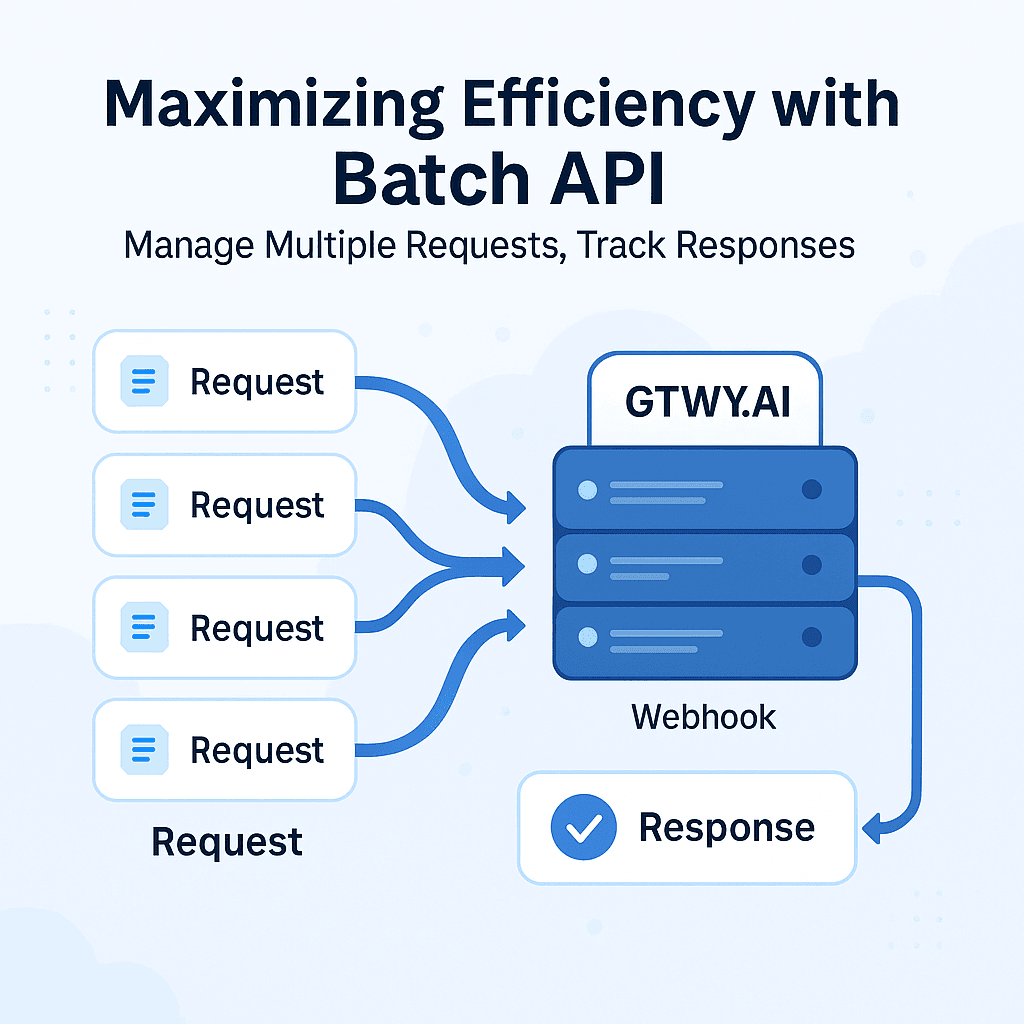
GTWY makes it simple to track, log, and manage responses from batch requests without building complex tracking systems yourself.
Here’s how it works:
Submit a Request
Send your requests to GTWY in batch format and include a webhook URL.Processing
GTWY forwards your requests to the target server. The server processes them asynchronously.Track Responses
As responses are completed, GTWY logs each one and automatically sends them to your provided webhook.No Manual Effort
You don’t need to track or log anything manually. GTWY handles it all, ensuring your data stays organized and accessible.
This makes GTWY a fully managed solution for anyone working with batch processes — saving you hours of backend work.
Why Choose GTWY for Batch API Management
Managing batch requests manually is time-consuming. GTWY simplifies the entire process with automation, visibility, and scalability.
Automated Tracking: GTWY automatically logs each request and response.
Streamlined Workflow: You can scale operations without increasing manual effort.
Seamless Integration: Works easily with APIs, webhooks, and LLMs.
Reliability: Ensures accurate, logged responses even when handling large batches.
With GTWY, you don’t just use a Batch API — you master it.
Conclusion
Batch APIs are essential for modern, high-volume AI workflows.
They save time, reduce costs, minimize server load, and unlock massive scalability.
When combined with GTWY’s automated tracking, logging, and webhook system, batch processing becomes effortless.
If you’re looking to streamline operations, accelerate workflows, and simplify your API infrastructure, GTWY’s Batch API integration gives you everything you need.
Batch smarter. Scale faster.
Your AI workflows will immediately feel the difference.
 Built with DocStar